Protanomaly
Protanomaly means the red (L) cones are shifted toward green: reds look darker and less vivid, and red-green differences shrink.
Which cones protanomaly affects
The red (L) cones are present but shifted, so they overlap more with their neighbour.
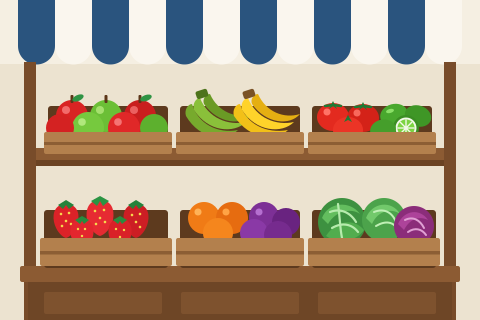
Colours that run together: red and brown, orange and yellow-green, pink and grey, purple and blue.
Family: red-green colour vision deficiency.
Everyday scenes with protanomaly
How common it is and how it is inherited
men
women
men of Northern European descent
Inheritance: X-linked recessive.
The red pigment gene is a hybrid that peaks closer to green, so the eye is also less sensitive to deep red light.
X-linked like the other red-green types; a woman has it only when both her X chromosomes carry a red-weak gene, so it is rare in women.
Its strength ranges from barely noticeable to close to protanopia.
How the test finds it
Misses the faint red-green plates; on two-digit plates favours the left digit; reds on the plates look dim.
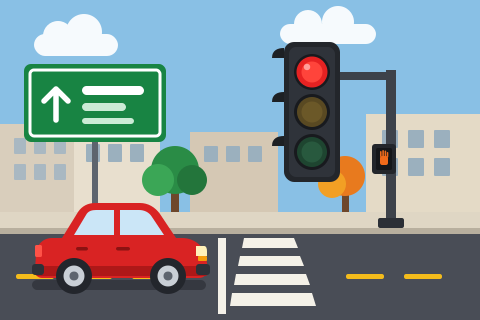
- Red text on dark backgrounds is hard to read.
- Red signals look less bright than for others.
- Usually mild enough to pass unnoticed into adulthood.
Questions
Is protanomaly a disability?
Not for daily life. Strong protanomaly can fail colour standards for flying and train driving because red signals look dim; mild cases often pass a second, practical test.
Can protanomaly be corrected?
Not cured. Notch-filter glasses help some people tell red from green better, but they cannot make red look brighter; red warnings still need a second cue.