Protanopia
Protanopia is red-green colour blindness with no working red (L) cones. Reds look dark, almost black, and merge with greens and browns.
Which cones protanopia affects
The red (L) cones are missing, so colours that differ only for them look the same.
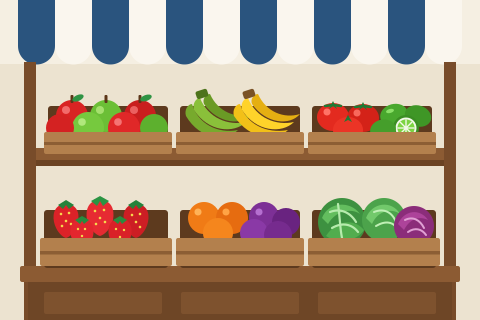
Colours that run together: red and black, red and dark green, orange and yellow-green, purple and blue.
Family: red-green colour vision deficiency.
Everyday scenes with protanopia
How common it is and how it is inherited
men
women
dimmer deep reds than for others
Inheritance: X-linked recessive, like deuteranopia.
The red cone pigment gene (OPN1LW) is missing, so the eye's sensitivity drops at the long-wave end: deep red light looks several times dimmer than to others.
Inherited the same way as deuteranopia, through the X chromosome; a carrier mother has a 1 in 2 chance of passing it to each son.
It is about as common as deuteranopia in men, but women are affected more rarely because the red gene is less often lost.
How the test finds it
Misses the red-green plates; on two-digit plates reads only the left digit; reds on plates look dark.
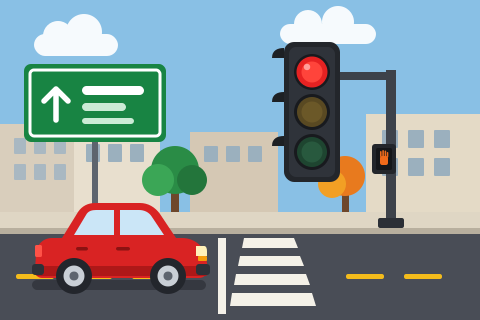
- Red brake lights and red text on black are hard to see.
- Red warning lights look dim: a driving concern in fog.
- Laser pointers in red are nearly invisible on dark slides.
Questions
Is protanopia a disability?
Not for daily life or a normal car licence, but protans are the group most often excluded from jobs with red signals: commercial flying, train driving and shipping, because red lights look dim and late.
Can protanopia be corrected?
No. A filter cannot make red light brighter for an eye without red cones. Pair red warnings with shape, position or a flashing pattern, and use a high-contrast colour for laser pointers and error text.